Table of Contents
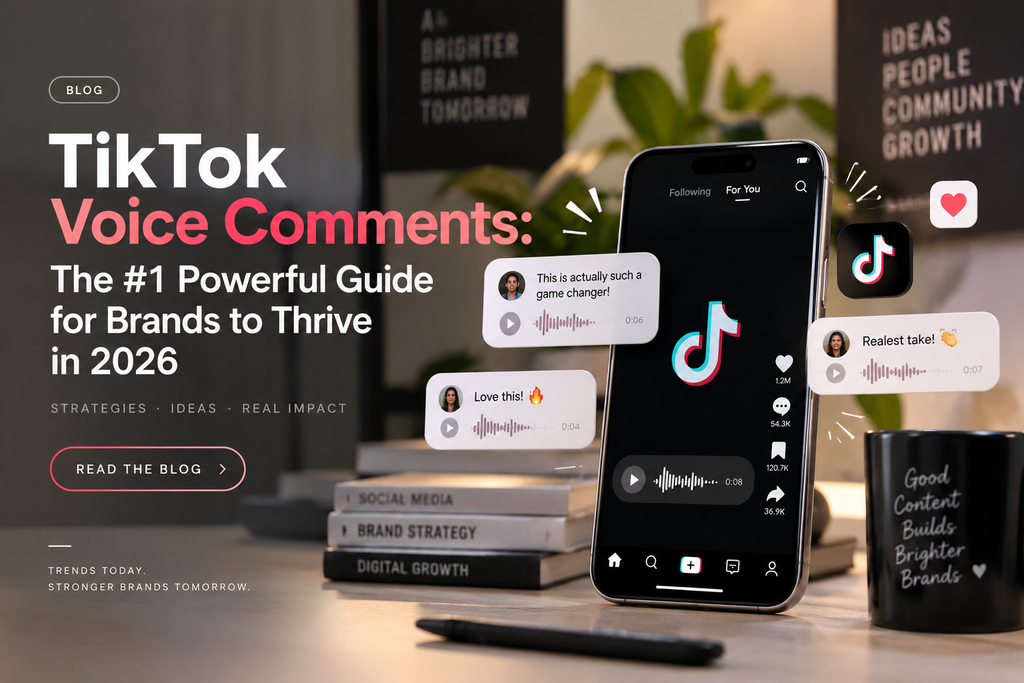
TikTok has quietly started testing one of its most human-feeling features yet: voice comments. Instead of typing a response under a video, users can now tap a microphone icon in the comment bar, hold to record, and drop an audio message directly into the comment section.
It’s still in limited testing — confirmed by early testers but not yet available for every account or region. TikTok hasn’t made a major public announcement, but it’s live enough that creators and marketers are paying serious attention.
At BrandBuilderz, we track platform shifts early because the brands that adapt first come out ahead when a feature goes mainstream. Here’s our full breakdown of what TikTok voice comments are, why they matter for your social media engagement strategy, and exactly who stands to benefit.
What TikTok Voice Comments Actually Are

The feature is straightforward. In the comment section of any TikTok video, there’s now a microphone icon alongside the usual text input bar. Tap it, hold to record, release to preview, and send. The voice note appears in the comment thread as an audio clip that other viewers can play.
This builds on a direction TikTok has been moving in for a while. Video replies to comments — where creators record a short video in direct response to a comment and post it as content — have already changed how creators interact with their audience. Voice comments are the next step: giving the audience the same expressive tools creators have been using.
It’s a small UX change with a potentially large psychological effect. Speaking is faster than typing, warmer than text, and carries tone and emotion that no emoji combination can fully replicate.
Why This Could Fundamentally Change Engagement on TikTok
To understand why voice comments matter, you need to understand what the TikTok algorithm actually rewards in 2026.
Engagement quality — not just quantity — is increasingly central to how TikTok decides which content to push. Meaningful back-and-forth conversations in the comments generate stronger distribution signals than a flood of fire emojis. The algorithm is designed to surface content that sparks real interaction, because real interaction is what keeps people on the platform.
Voice comments directly address the biggest friction point in generating real engagement: effort. Typing a thoughtful response takes time and focus. Recording a voice note takes seconds. If the barrier to leaving a substantive comment drops, here’s what follows:
What the Algorithm Rewards in 2026
- Comment volume increases. More people participate because the effort cost is lower — and more comments signal to TikTok that the content is worth distributing.
- Comment quality improves. People express more nuance, more emotion, and more context when speaking versus typing. Higher quality interaction = stronger algorithm signal.
- Dwell time grows. A comment section with playable audio clips keeps viewers inside the post longer — one of the strongest engagement signals on the platform.
- Community feels more real. Audio adds personality and humanity to interactions in a way text cannot. Comment sections start feeling less like social media and more like actual conversation.
How Voice Lowers the Friction to Comment
According to TikTok’s 2026 trend forecast for marketers, the era of passive consumption is over — users are in full discovery mode and expect a return on the time they invest. Voice comments fit perfectly into this shift: they make participation feel natural, fast, and worth doing.
All four outcomes above — higher volume, better quality, longer dwell time, and stronger community feel — are things the TikTok algorithm rewards. Voice comments, if they stick, are a direct lever for organic reach.
Who Benefits Most — and Who Gets Left Behind
Not every account will benefit equally from voice comments. The feature rewards accounts that already have something the algorithm values: genuine community. Here’s how it breaks down.
Brands That Win With TikTok Voice Comments
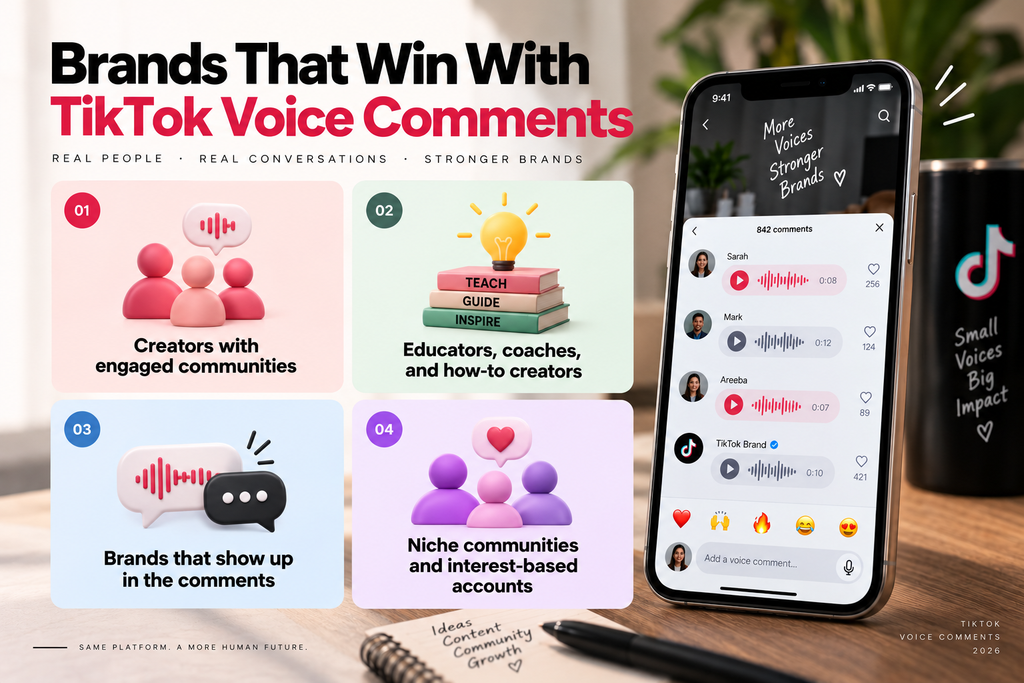
- Creators with engaged communities. If your followers already want to talk to you, voice comments give them a warmer, more personal way to do it. Creators who respond to voice comments with their own voice — or with TikTok’s existing video reply feature — will build comment thread dynamics that feel closer to actual relationships than anything the platform has offered before.
- Educators, coaches, and how-to creators. Voice allows followers to ask questions with real context, tone, and specificity that a typed comment can’t carry. A question asked in someone’s actual voice — with genuine curiosity — is significantly harder to scroll past.
- Brands that show up in the comments. A brand leaving a warm, thoughtful voice reply to a customer comment is a completely different brand experience than a generic text response. The brands willing to invest time in voice interactions early will stand out significantly from competitors who are still treating the comment section as a notification dashboard.
- Niche communities and interest-based accounts. The more specific and passionate an audience, the more likely they are to want to speak rather than type. Accounts built around tight communities — fitness, gaming, cooking, finance, parenting — are positioned particularly well.
Who Doesn’t Benefit
Brands that post and disappear. Voice comments will make passive comment sections even more obviously dead by comparison. If your current strategy is to publish content and not engage with the response, voice comments won’t help you — they’ll highlight exactly what’s missing.
The same goes for accounts prioritising content volume over community. High output with no relationship to the audience beneath it will not benefit from a feature designed to deepen that relationship.
If you’re in this camp right now, the fix starts with your TikTok engagement strategy [link to your TikTok strategy post] — not the feature itself.
What Marketers Should Do Right Now
The feature is still in testing, which means you’re early. Here’s how to position yourself for when it rolls out broadly:
- Audit your comment section health. Be honest — is there real conversation happening under your content right now? If not, start building that before voice comments make the gap more visible. Reply to comments, ask questions in your captions, create content that invites specific responses rather than just passive views.
- Train your brand voice for audio. Your written brand voice and your spoken brand voice are different things. Think now about how your brand would sound in a voice comment — what tone, what warmth, what personality. Practice it before the feature is everywhere.
- Watch the early adopters. Creators and brands who get access first will experiment publicly. Study what works. What kinds of voice comments drive the most replies? What tone generates the best engagement? You can learn from others’ testing before you do your own.
- Update your TikTok content strategy. Voice comments don’t change what great TikTok content looks like — they change what great TikTok community management looks like. Your content strategy stays the same; your engagement strategy needs to evolve alongside it.
Need help building a comment section strategy that’s ready for this? Read our guide: Social Media Engagement Tips That Actually Work [link to your engagement post].
The Bigger Picture: Where TikTok Is Heading
Voice comments aren’t an isolated feature. They’re part of a clear platform direction: making TikTok feel less like a broadcast channel and more like a community.
TikTok already has video replies to comments, duets and stitches that let anyone build on someone else’s content, live features that enable real-time interaction, and now voice commenting in testing. The logical extension of this trajectory is a platform where the line between creator and audience becomes increasingly blurred — where everyone has expressive, human tools for interaction.
This tracks closely with what we’ve seen in social commerce [link to your social commerce blog post] — where the same principle applies: brands that build community before they sell always outperform brands that treat social media as a broadcast channel.
The brands winning on TikTok in the next two years won’t just be the ones making the best videos. They’ll be the ones building the best communities around those videos.
For brands and social media managers, the platform is signalling clearly what it values: participation, not broadcasting. Conversation, not content drops. Voice comments are one more piece of infrastructure for that.
Stay on top of shifts like this by following our social media marketing trends coverage [link to your trends/news section] — we break down every major platform update and tell you exactly what it means for your brand.
Frequently Asked Questions
What are TikTok voice comments?
TikTok voice comments allow users to leave audio notes in a video’s comment section instead of typing. Users tap a microphone icon in the comment bar, hold to record, and post the voice note as a comment. Other viewers can play it directly in the thread.
Are TikTok voice comments available now?
As of May 2026, voice comments are in limited testing and not available to all accounts or regions. TikTok has not made an official global rollout announcement yet.
How do TikTok voice comments affect engagement?
Voice comments lower the friction to leave a meaningful comment, increase dwell time in the comment section, and add human warmth that text alone cannot convey. All three outcomes are signals the TikTok algorithm rewards with wider distribution.
Who benefits most from TikTok voice comments?
Creators with engaged communities, educators, coaches, and brands that actively manage their comment sections will benefit most. Brands that post without engaging with their audience will not see a meaningful improvement.
What should brands do to prepare for TikTok voice comments?
Start by auditing your current comment section engagement — is there real conversation happening? Focus on building genuine community now, define how your brand sounds in audio, and watch early adopters to learn what works before the feature goes mainstream.
Want to Stay Ahead of Platform Changes Like This?
At BrandBuilderz, we track what’s shifting in social media so your brand doesn’t have to. From algorithm updates to new features to what’s actually working for real businesses right now — we break it down and tell you exactly what it means for your strategy.
Follow BrandBuilderz for weekly social media marketing insights, or get in touch if you want us to manage your brand’s social presence the right way.